
Key takeaways
- A website holds the company. A landing page holds one campaign. They fail when one page tries to be both.
- Use the site for who you are. Use a landing page when a campaign promised one offer.
- Most service businesses need both. Build the container that is on fire this month. Leave the other one its own URL.
The ad promised a scoped kitchen consult. The click opened a homepage with six services, a blog, and two phone numbers. The person who arrived for one thing started comparing. Then they left.
That is website vs landing page in a single wasted click. A website holds the company. A landing page holds one campaign. Most service businesses need both. They fail when one page tries to be both — a homepage stuffed with this month's promo, or a campaign URL wearing the whole site.
The site is who you are when someone looks you up. The landing page is the one offer a stranger was promised this week.
Two containers, two jobs
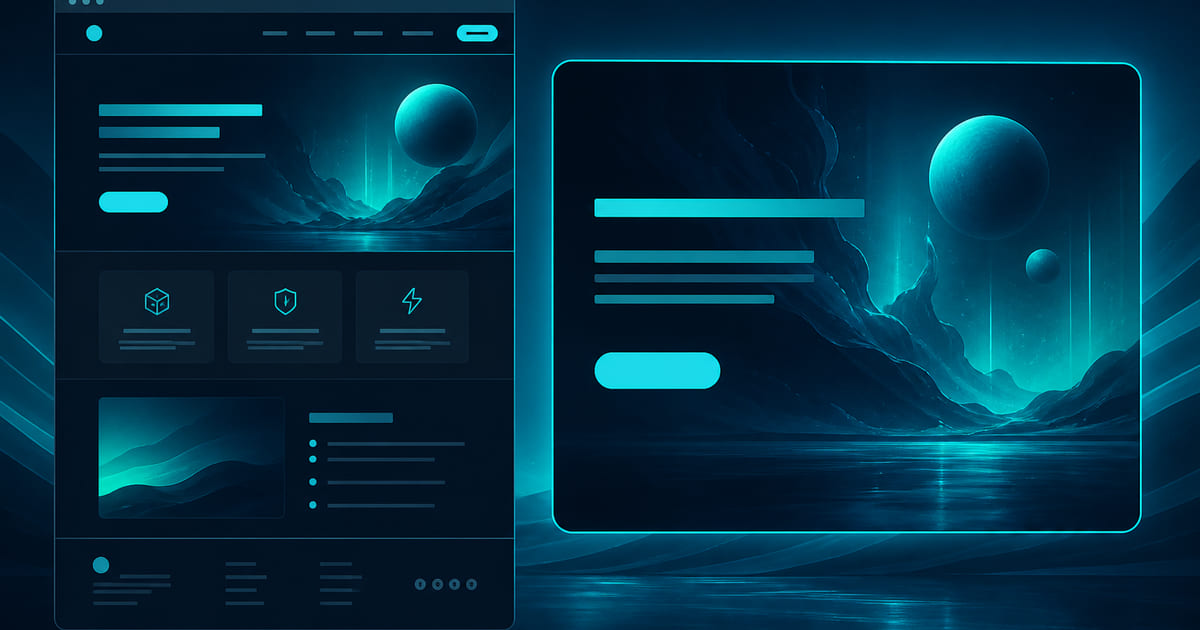
A website is the company on the public web. Name. Offer family. Proof. How to reach you. Pages that do not copy each other. Service website structure is that job, split across URLs: home states the company, interiors each do one job, and the path to act stays short.
A landing page is one URL that does one commercial job. Someone clicked an ad, a search result, or an email that promised a specific thing. The page keeps that promise: name the offer, show why it is safe to believe, answer the reason they would leave, and ask for one action. How to create a high-converting landing page is the four-part brief: headline, proof, objection, one action.
Campaign page vs homepage is the same split in buyer language. A campaign page keeps the promise of one ad, one email, or one launch. A homepage introduces the company. If you send paid traffic to the homepage, you are asking a warmer stranger to pick a department. If you put the whole company on the campaign URL, you are asking a person who arrived for one offer to wander.
| Job | Website | Landing page |
|---|---|---|
| Hold the company | Yes | No |
| Carry one campaign | No | Yes |
| Site-wide navigation | Yes | Exit |
| Extra offers | Own URLs | Leak |
| This month's paid traffic | Wrong destination | Right destination |
A website is not a bigger landing page. It is the entity. A landing page is not a smaller homepage. It is a promise kept.
Use the traffic-origin matrix
Map the primary traffic before choosing the container.
| Origin | Visitor already knows | Best default destination |
|---|---|---|
| Name search or referral | The company name, little else | Homepage or relevant service page |
| Broad commercial search | The category or problem | Focused service or comparison page |
| Paid search ad | The exact promise in the ad | Dedicated landing page |
| Email or partner campaign | The offer and source relationship | Campaign landing page |
| Social post | The specific story or asset | Matching article, case, product, or landing page |
| Existing customer | The task they need to complete | Direct operational page, not the homepage |
The matrix prevents two expensive mistakes. The first is sending narrow paid intent into a homepage that asks the visitor to explore. The second is using a thin campaign page as the only public presence, so a careful buyer searches the company and finds no durable entity behind the offer.
The containers should support one another. The landing page can quietly link to company proof when due diligence is needed. The website can route a high-intent service visitor into a page with a more focused action. The difference is hierarchy, not absolute isolation.
Build both only when the traffic justifies both. A new business with no campaigns may need the durable website first. A business spending on a narrow offer may need the landing page before a complete rebuild. The immediate leak decides the order.
Read Google Ads Help — Landing-page experience and Google Search Central — How Search works.
Lookups versus promised traffic
You need a website when the company has nowhere honest to stand.
Someone searches your name and finds a directory listing, a stale Facebook page, or a one-pager that lists eight services and proves none. A buyer asks if you have a site and you send a PDF. Five pages say the same paragraph. Twenty pages say nothing. There is no place a campaign can point back to when someone wants to check that you are real.
That is a full website. Home states the offer. Interiors do not copy each other. Proof sits where a stranger can find it. A form, a call, or a booking works on a phone. Web development is how that presence gets built: structure, copy, pages that hold up, a path that actually submits. How to structure a homepage is the look-up half: the company, not this week's promo.
If you only have a campaign URL and no company behind it, a careful buyer will look you up and bounce. The landing page closed the impatient. The careful ones — often the ones who pay — found nothing to trust.
When to use a landing page is a traffic question, not a taste question.
You are about to spend on ads. An email promised a scoped visit, a launch price, or one service. A partner is sending a list. You have a homepage that lists everything you do and you cannot point paid traffic at a menu. The offer is one sentence you can finish without the rest of the site.
That is a landing page: one URL, one ask. Not a smaller homepage. Not a blog post with a button glued on. Not the site header plus this week's promo.
A high-conversion sales funnel is the path: one buyer, one problem, one next step. The landing page is the URL that path lands on. A clever path into a menu of services still dumps the buyer in a menu. A sharp page with ads pointing at the homepage still fails.
If the campaign is new and the site is a menu, do not point the ad at the menu. Point it at the page that states the one offer the ad promised.
Monday: write the sentence the ad or email already promised. If the homepage cannot say that sentence in the first screen, the campaign needs its own URL.
One page wearing two hats
This is the usual leak.
The homepage gets a banner, a countdown, a second hero button, and a form — and still keeps six nav links, three packages, and a blog. The campaign URL gets the site header "so it feels on brand," plus the other services "while they are here," plus a footer sitemap. Both pages now do two jobs. Neither finishes one.
A person who arrived for one offer starts comparing. Then they leave to think. Then they do not return. You do not need a fabricated conversion rate to see the mechanism. More doors, more wandering. More offers, more stall.
Navigation is an exit on a campaign URL. Extra offers are a second job. A homepage that tries to close this week's launch is no longer holding the company; it is wearing a campaign. A campaign page that tries to introduce the company is no longer a landing page; it is a menu with a headline.
One page, one job. If someone needs the full presence — several pages, a launch, a path a campaign can use — that is the full website. If they need one URL for a service, a launch, or a campaign, that is the landing page. Do not merge them to save a URL.
This month's fire
You do not need both on the same Monday if only one job is on fire. You need to know which job is on fire.
If you have a campaign and a menu, build the landing page first. The spend is the clock. The menu can wait a week. The ad cannot point at a homepage that asks the buyer to pick a department.
If you have no presence a buyer can trust, build the website. A campaign URL with no company behind it will convert the impatient and lose the careful.
If you already have both and they look the same — same nav, same packages, same footer — split the jobs. Take the extra offers off the campaign URL. Take this month's promo off the homepage, or give it a quiet line, not a second hero. The site goes back to the company. The landing page goes back to one action.
If you cannot name the offer in one sentence, do not build either page yet. You will design around mush, then pay to rewrite it. Write who it is for, the problem you take, and the next step. Then pick the container.
Checkout belongs on a landing page only when the buyer can already name what they are buying. If the offer is still a conversation, a short form is the honest close.
Keep the pair
The site is the place they check after the campaign. The landing page is the place the campaign lands. A careful buyer will do both: act on the offer, then look up the company. If either URL is mush, the other one pays for it.
That is why most service businesses need the pair, not a winner. The website holds the company so a search, a referral, or a second visit has somewhere true to land. The landing page holds one campaign so paid traffic, a launch, or an email has one next step. Web development is the same craft on both: structure, copy, a page that holds up on a phone.
We have built both since 2014. More than twelve years. More than fifty businesses. More than a hundred websites. A campaign URL with a nav bar and three extra offers is still a menu. A homepage wearing this week's ad is no longer holding the company.
One new URL for a service, a launch, or a campaign is a landing page. Several pages that have to work as a presence is a full website. Most need both. They fail when one page tries to be both.
Pick the job that is on fire. Build that container. Leave the other one its own URL. If you want that scoped, start here.