
Key takeaways
- Write the offer before you open a builder. A template will not invent the next step.
- Ship in this order: offer, structure, content, design system, performance, then the work after launch.
- Publish is a midpoint. CLICK.BLUE will build the site, can keep it managed, and can run SEO after launch.
Most 2026 website projects start in a template. Someone opens a builder on a Sunday, picks a look that feels expensive, and hopes the offer will appear once the hero looks finished.
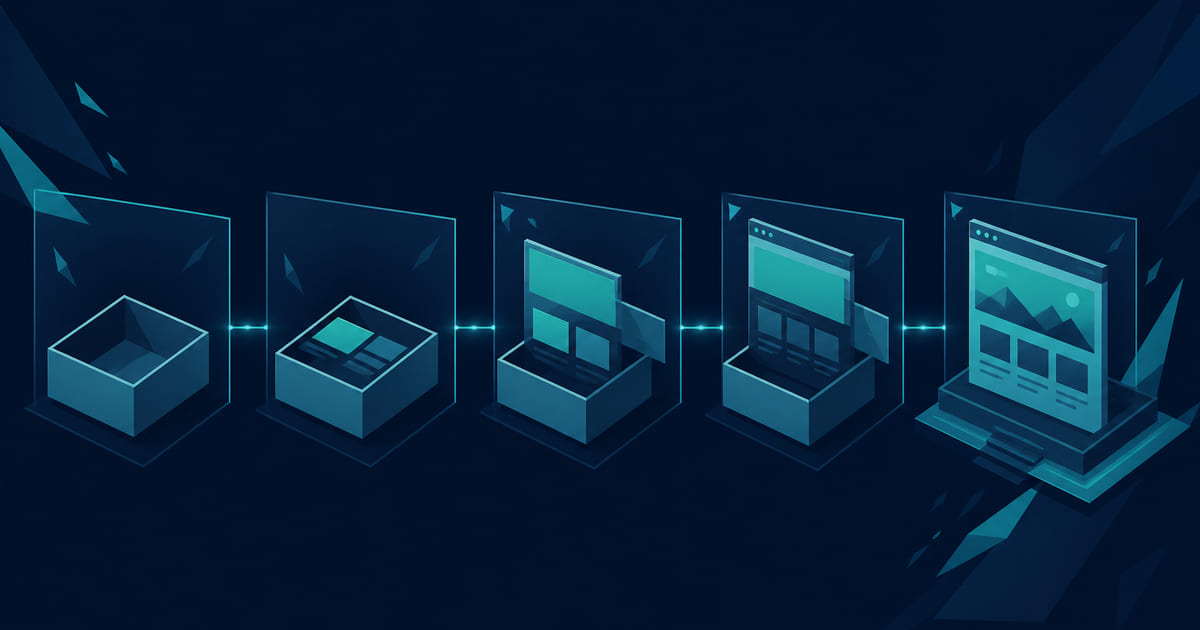
It does not. A stranger still cannot tell what you sell, who it is for, or what happens when they say yes. Building a website in 2026 is not a software question. It is a work order: offer, then structure, then content, then a design system, then performance, then the work after launch. Pick the CMS last. Treat publish as a midpoint.
The week you waste in the builder
The first week is usually spent on the wrong object. Fonts. A hero video. A plugin that promises animation. A theme that looks like a company you admire. None of that decides the page.
A site is a place a stranger decides whether to trust you. The tool does not make that decision. The line on the first screen does. If that line is mush, every later choice gets expensive. You design around a vague hero. You write around a service list that is really a résumé. You pick a CMS because a tutorial used it.
Write the offer as if the site were not there. Then open the tool.
Write an architecture decision record before the repository grows
For every material platform or framework choice, write one short architecture decision record:
- Context: the business and user problem.
- Decision: the platform, pattern, or service chosen.
- Constraints: performance, accessibility, security, content, integrations, budget, skills.
- Alternatives: credible options considered.
- Consequences: what becomes easier, what becomes harder, and what the team must now own.
- Exit: data, content, assets, and interfaces required to migrate.
A marketing site may choose static generation and a hosted CMS. A product may choose the Next.js App Router because it needs React Server Components, streaming, and server functions. A small brochure may choose Webflow, Framer, Squarespace, or plain HTML because the operating team matters more than framework flexibility.
Next.js explicitly distinguishes its App Router, which uses newer React features, from the still-supported Pages Router. It also warns that its backend-for-frontend capabilities are an API layer rather than a universal backend replacement. Those are examples of why architecture must follow documented boundaries, not conference slogans.
Add security maintenance to the decision. React and Next.js published critical Server Components advisories in late 2025 and urged immediate upgrades. “Managed framework” does not mean “maintenance-free application.” Record version ownership and an update path before launch.
The best architecture is not the one with the most capability. It is the smallest one that can satisfy the constraints and remain understandable to the team that inherits it.
See Next.js — App Router documentation and React — Official blog.
A sentence a buyer can finish
Before a homepage exists, you need a line a buyer can repeat: what you sell, who it is for, and what happens when they say yes. Not a slogan. A next step — a call, a form, a booking, a purchase.
Try it out loud. If you need a second sentence to explain the first, the first is not ready. Cut anything that does not serve the step. An architecture brief begins with an offer sentence and the transactions it must support, not a framework name. "Creative solutions for modern brands" is a stall.
A landing page is sometimes enough to prove the sentence. A full website is the same job at more URLs. If the mark is still a default font and a logo you do not trust, settle brand far enough that the site will not need a second identity six weeks later. You do not need a forty-page brand book. You need a name, a voice, and a look that will not fight the pages.
Draw the map before the mockup
Once the offer is clear, decide what each URL is for. Home is not "about us with a slider." Home is the offer, proof, and the next step. A service page does one job. Contact is a form that works. A journal exists only if someone will keep it honest.
A small map beats a large one. Five pages that close is better than twenty that stall. This is information architecture, not decoration. Web design that skips the map usually looks finished and still loses the reader.
Ask, for every page: who lands here, what they already know, what they should do. If you cannot answer, do not build the page yet. You will pay for it as a redesign that was really a second brief.
| Step | Job |
|---|---|
| Offer | What you sell, to whom, and the next step |
| Structure | Which URLs exist, and what each one is for |
| Content | Words a skeptical buyer will finish |
| Design system | Type, color, and components that hold up on a phone |
| Performance | Speed, titles, and forms that actually submit |
| After launch | Updates, search, and the next page |
Words first, then the look
Content is not a placeholder. It is the product. Headlines that could belong to any competitor waste the structure you just drew. Write for a skeptical buyer who will not finish a vague paragraph.
Assistants can draft. They cannot sit in on your sales calls or know which claim you can stand behind. If you use them, treat the output as a first pass. The comparison is not "AI versus humans." It is who owns what ships. That is the DIY-tools argument in one line.
SEO content starts here, not after launch. Titles, headings, and the words on the page are what search engines and buyers both read. You cannot bolt that on a month later and call it a strategy.
Write the homepage, the service page, and the contact path before you dress them. A pretty empty page is still empty.
One type, one color, a few components
On a marketing site, a design system is type, color, spacing, and a few components that hold up on a phone: header, hero, proof, form, footer. Repeat them. Change them on purpose.
Taste without a system produces a pretty homepage and a messy interior. A system without an offer produces a consistent nothing. If you need a mark and a short kit before the build, that is the logo and branding kit — enough identity to ship, not a rebrand spiral.
Do not chase last year's look. Fashion is a later conversation. What is actually changing is useful after the offer is solid. A site that loads, reads, and converts will outlast a fashionable one that does not.
Speed and forms are launch work
Performance is not a plugin you add when a score turns red. It is image weight, font files, unused scripts, and a form that submits on a phone. If the page is slow, the offer does not get a hearing.
Check the jobs that fail quietly: broken links, missing titles, a thank-you page that 404s, a form that drops mobile submissions. Web development that skips this is not done. Launch QA is part of the build, not a favor.
Test on a mid-range phone, not only on the designer's docked display. Most buyers will meet you there.
Software last
The CMS is a production choice. It is not a strategy.
Choose the tool after you know the offer, the map, the writing, and how often someone will log in. If a capable person on your team will publish every week, a visual builder can be the right call. If the site is already on WordPress and the job is to repair it, stay there until a rebuild is actually cheaper. If neither is true, pick the stack that a team can finish and keep honest.
We like Webflow. We respect WordPress. We will build on either when it fits. The useful question is not which builder wins. It is who finishes the work. That is the Webflow comparison in one sentence: the software is fine; an unfinished site is still expensive.
Monday after publish
Publish is when the real work starts. Offers change. A new page is needed. Search engines have to keep understanding the thing you shipped. Someone has to watch the form, the uptime, and the copy that went stale.
Managed website care is that work: updates, monitoring, the next change, scoped in writing. SEO is how buyers keep finding the offer after the first week of traffic fades. A site with no owner after launch is a brochure that ages in public.
If you wanted a checklist you can run this week, use this one:
1. Write the offer and the next step. 2. Draw a small page map. 3. Write the pages a buyer will finish. 4. Lock a small design system. 5. Build, then prove speed and forms. 6. Pick the CMS that can hold that work. 7. Launch, then keep the presence current.
Skip a step and you will pay for it later.
CLICK.BLUE has designed and built this way since 2014 — more than twelve years, more than fifty businesses, more than a hundred websites. The full website is the scoped site. Managed website care is the work after publish. If you already know the offer and want it built in that order, start a scoped proposal. The stack is not the offer. The finished site is.